World Disability Day
The International Day of Person’s with Disabilities is held on 3 December every year. It was held in 2025 also with the theme “Fostering disability‑inclusive societies for advancing social progress”.
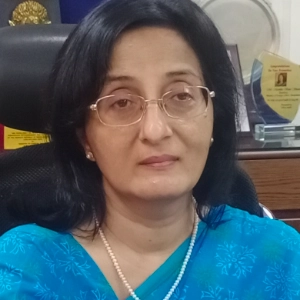
I was asked to speak at a seminar organized by the UNOPS, the Embassy of Algeria in Bangladesh and Diplomats World magazine. in Dhaka on 3 December 2025. I had collaborated with the UNOPS the year before, in 2024, when I had recorded a short inspirational video message together with Sudhir Muralidharan, Head of UNOPS in Dhaka.
I was happy to speak on the occasion, because I feel that there is still so much more that we need to do on the issue of mainstreaming persons with disabilities/special abilities/handicaps – what ever tag you would like to put on those people who are different from the majority of the society and usually considered useless and a burden. Having a serious issue with my eye sight resulting from severe glaucoma, I have been at the heart of receiving incredible support and incredible discrimination while serving in the Ministry of Foreign Affairs. I will share more of my experience in this regard in later blogs, but today I am sharing what I said at the seminar on 3 December 2025.
The gist of my comments is given below:
To my mind the theme WDD 2025 “Fostering disability inclusive societies for advancing social progress” is indeed a very compelling one with four key words – Fostering, Disability, Inclusive. and Social Progress.
Before we begin to talk of inclusive societies we need to be very clear in our minds what or who we are trying to include or mainstream into our societies. What exactly is disability? – I am not going go for any clinical or legal definitions of disabilities, but simply would like to point to an essential issue that I as a person with handicap or limited abilities because of extreme low vision, that restricts me from leading a life similar to a person who has none of these limitations, it is quite challenging to make these people understand that disability is not something that is one size-fits-all and every person who has some limited ability or disability or handicap (physical – blindness, deafness, mobility issues or mental – depression, ADHD, Autism spectrum disorder and so on) )has unique needs. Different disabilities need to be addressed and accommodated differently – a person who is blind will have very different needs from a person who is wheel chair bound or someone with mental health issues or special needs. Yet, all too often well-meaning social workers, planners, designers, policy makers and activists, tend to lump all disabled persons together and think that providing solution to one kind of issue will solve everyone’s problem, for example, ramp access for wheel chairs will take care of the needs of all other disabled people.
Unfortunately, disability is such a condition, that unless one actually becomes disabled (even temporarily), it is very difficult, almost impossible in fact, to envisage what the disabled person is going through. In addition to the social stigma (yes, no matter what we say, there is still a sense of stigma and shame associated with disability) and it takes a lot of courage for the disabled person to get out to venture out into the world. Though there are a lot of people who are willing to help and accommodate these needs, there are almost an equal number of people who are quick to point fingers, smirk and make life as difficult as possible for the disabled person. Thus, it is not simply a matter of providing a comfortable physical access but changing mindsets that are also important to foster a disabled inclusive society for social progress. After all, disability is a state of mind – not the person who is disabled, but of the person who is perceiving him/her; if he perceives that I am disabled, then no matter how much I try I will not be considered as a contributing member of the society and will be considered as a burden.
Since I studied architecture as a student, let me share some of my thoughts on situation of the infrastructure in our country vis-à-vis disabled access or comfort.
Actually, the codes, guidelines, rules and regulations are quite satisfactory for ensuring that buildings and their surroundings are accessible to all. For example, the Bangladesh National Building Code (BNBC) 2020 is quite a progressive document – it aims to ensure that people with permanent or temporary disabilities (mobility, visual, sensory) can access buildings, services, public facilities and amenities with dignity, especially public- use destinations (schools, hospitals, shops, malls, transport hubs). The code mandates accessible toilets, entrances, routes, signage — which is vital in an urban context in cities like Dhaka.
For residential buildings too — especially apartment-style developments — BNBC tries to ensure that at least one unit and access route per building are accessible, which allows more inclusive housing.
As we all know very well, the intentions are always good, but the devl lies in the implementation – lack of awareness and sensitivity among the designers, lack of enforcement and coordination among the different authorities involved in inspection, low priority in allocation of budget and most importantly lack of mainstreaming of the issue, that accessibility is the first step to building an inclusive society. How can a person who cannot enter a building contribute in any way to a society and not feel that he is a burden? This lack of awareness, to my mind, is one of the most important issue pulling us back from creating inclusive societies and achieving social progress.
There is another aspect, that of mental health challenges and social inclusion; my son was diagnosed with Asperger’s syndrome, it is a variant of autism spectrum disorder, when he was 10 years old. Thanks to the support and understanding he received from the British School in New Delhi (I was posted in the Bangladesh High Commission in New Delhi from 2004-2009), he not only completed IGCSC and IB Diploma with flying colours, he went to on complete a PhD in Music from Sheffield University all the while navigating life as an independent and contributing member of the society. The system in UK is so well geared to accommodate people with Special Needs that unless one is severely handicapped or in a debilitating condition, they are accepted as full members of the social fabric.
According to the estimates of agencies such as the World Bank, World Health Organisation and various UN bodies, around 14-16% of the world’s population, i.e., more than a billion people, are suffering from some from of disability. The numbers in Bangladesh are extremely difficult to confirm because of unreliable data bases, lack of reporting from stigma attached to the condition, or lack of awareness or embarrassment and reluctance in dealing with the issue
However, disability cannot be wished away, and all estimates indicate that with aging populations, people with some form of mobility or other issues will be rapidly increasing in the days ahead. Accommodating the needs of people with disabilities is not a favour being bestowed on them, it is a right – one that enables a person with special abilities to maximise his or her talents and contribute to national development and prosperity. A society that fails to take into account the potentials of the almost a tenth or more of the population will find it more challenging to attain progress.
Comments