Engaging with IR Department Fresher
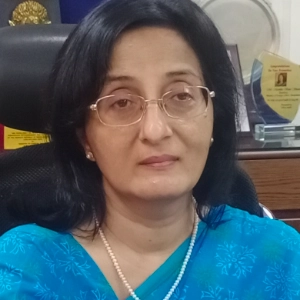
Yesterday I spoke at the Fresher’s welcome/orientation programme for the Fresher’s in the International Relations Department of the Dhaka University. I have had a good working relationship with the IR department since I worked as Rector Foreign Service Academy from 2023-24 after I retired as Secretary, Ministry of Foreign Affairs in December 2022.
We worked with the IR Department to set up the Professional Masters in Internal Relations and Diplomacy (PMIRD) for the newly recruited officers of BCS (Foreign Affairs) officers undergoing mandatory training at the FSA.
Following my departure from the FSA for my Pre-Retirement Leave in 2024, IR Department has remained engaged with me and sometimes they invites me to their programmes. Yesterday’s programme where addressed the Fresher’s of 20th Batch was truly an honour for me.
The gist of my comments are given below:
To the freshers joining the world of International Relations – welcome! I am honoured and delighted to be with you at this momentous juncture of your life and I would like to thank the IR Department for inviting me today to be with you.
Let me begin by asking three questions –
- Why study IR?
- Why study IR now?
- Why should someone from Bangladesh study IR?
Today, you are not simply beginning a university degree. You are stepping into a discipline that sits at the crossroads of history, politics, economics, diplomacy, conflict, culture, technology, and human ambition itself.
International Relations is not just about states and treaties. It is about people, power – it is about understanding why nations cooperate, why conflicts emerge, why inequalities persist, and why hope still survives even in the most divided parts of the world.
So. The study of international relations helps us to understand the world around us and to navigate ourselves through it.
But what makes this subject so important right n ow?
We, the generation of Baby Boomers and Gen X, grew up in a world of relative stability and for almost seventy years we believed that the world had left behind its worst conflicts and worst traumas of horrific human behaviour and would focus on rebuilding and increasing prosperity and development while promoting social justice.
Unfortunately, it proved to be an illusion 0 the last decade and half has witnessed shifts in global politics and in relations between states, shifts that are accelerating day by day as resources become scarcer, technologies more sophisticated and non-state and extra-state actors assert their influence over sovereign states.
New alliances. New alliances are being shaped while old ones are being rewritten – new terms like strategic autonomy, asymmetric warfare, mosquito fleets, mini-laterals, and so on are entering our vocabulary.
International Relations will provide a critical tool to those who wish to study, analyse and understand the world that is shifting in an increasingly faster pace. this understanding is critical to those who need to strategise for the future and plan for new challenges whether they are traditional security challenges or non0tradittional challenges including emerging challenges arising from misuse of AI and social media.
And now we come to question number three – why should IRR interest someone from Bangladesh?
To me, one of the biggest resource deficits that we have right now is the deficit that we have of people who understand International Relations and related strategic issues. We have a serious lack of analysts, commentators, media persons. Policy makers, and yes, even politicians who have a very narrow or limited vision of the how and why nations behave as they do, and how Bangladesh should strategise its options to maximise benefits and minimize costs. As she grows in her Developing Country status with larger GDP per capita and larger GDP, Bangladesh will increasingly feel the dual squeeze of global resource crises and increased pressure from external actors who would like to benefit from this growing economy.
We frequently talk of balanced foreign policy or ‘so-and-so dependent/centric’ foreign policy which apparently has been causing harm to the country since our independence. Speaking from a practitioner’s point of view I can tell you that no country at any point of time has ever been powerful or strong enough to be free from external influences, whether it was Britain when it was at the height of its imperialism phase, or USA during Pax Americana or the Ottomans, or Greeks or Romans when their power and influence stretched to the tips of the known world.
All nations, big or small, need to hedge their bets and choose sides – as they grow or decline, their requirements shift, and nature of partnerships change accordingly. I always recall a senior colleagues words when I had just joined the service in 1991 he said, “Mashfee you have joined at a very fortunate time.” When I asked him why he thought that, he said, “You have joined the diplomatic serive when you no longer have to go around asking for Food Aid; you will be able to focus on other more important issues for the country”. It was a profound statement which I came to understand better later in my career. Bangladesh’s requirements changed from Aid Dependency in the 70s and 80s, to trade issues like market access and DFQF and tariff and non-tariff barriers in the 90s as our manufacturing capacity grew to a situation where we became a voice for the global south on issues of climate justice, development finance, migration and socio-economic change.
It will be critical for Bangladesh to have people in the right places who have a deep understanding of international relations so that they can give correct advice as the country navigates and increasingly complex, interconnected, inter-dependent yet dis-united world that will dominate our lives in the near future.
You the new generation of IR experts will have a critical role to play in the future of the country a role that I am confident you will perform with diligently and responsibly.
I wish you good luck for the future!
Comments