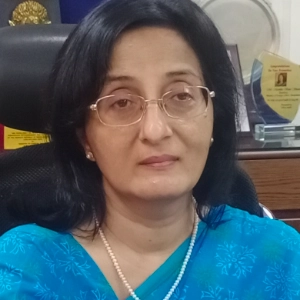
I wonder why it is so difficult for society to offer equitable opportunities to women that would enable them to develop into contributing members of the society.
Recently I attended a seminar organized by the UNOPS, UNWOMEN and UN Resident Coordinator for Bangladesh that aimed to understand and present how far Bangladesh has progressed on SDG 5 (gender parity/equitable opportunities for women) and SDG 16 (governance) after working at the grassroots level for a year on these Goals the seminar was entitled “She Leads Tomorrow” (I have reservations about the title: I would prefer to have it as She Should Have Led Yesterday). I was invited to speak as a panelist on a session that aimed to share experiences of female diplomats; the Ambassadors of Morocco, Bhutan and the Maldives were also in the panel with me.
While the panel discussion did not really cover much substantive ground or offer new insight on how women diplomats shape their careers and what challenges and obstacles they navigate throughout their careers (partly because the time allotted for the discussion was only 30 minutes which hardly allowed for any in-depth discussion and also because their was no scope for interaction with the audience), the theme and preceding discussions got me thinking on what it is to be a girl/woman who wishes to have the freedom to make her own choice without society judging her choices according to some predetermined norms over which she has no control. I have no intention of going into deep discussions about feminism or feminist theories – I am simply interested to understand some of the narratives that shape our thoughts and consequently our behavior choices.
I grew up in a family of girls; three daughters (No brothers! Another red flag in our society that believes that a family is somehow lacking if it does not have a son), Amma and Abba. We grew up in a kind of social, psychological and cultural freedom that is rare in a typical Bangladeshi household. In a way I think it shaped my view of life, I grew up assuming that every family was like ours and found it strange that they were not. In this utopian bubble that I grew up in, I thought empowerment and opportunities were automatic and to be taken for granted. Most girls however, do not enjoy this sort of life when they are growing up – many girls grow up to womanhood, enter marriage, become mothers and end their lives without realizing that they have the right to agency over their lives. Fathers, brothers, sons and male colleagues, members of the society create an environment that often leaves women financially, economically, psychologically and physically dependent and vulnerable. I was once shocked when a classmate (a radical Leftist at that time!) expressed that he did not like it when his mother went out of the house and he felt that she should always be at home to serve their needs (unfortunately he carried this chauvinistic attitude into his marriage, though luckily his daughter seems to have escaped this pattern of domination). They problem is, this situation is created not only by men, but often enabled by women also since they believe that this will give them a better life.
To me empowerment represents something simple – the ability to make a choice; financial, education, career, marriage, motherhood, or whatever. However, huge social and cultural layers overshadow this right to choose one’s destiny.
Joining the diplomatic service in 1991, I went through many stages of these physical social and cultural barriers. I was six months pregnant when I joined in January (my son Tanmoy was born in April) and the maternity leave granted was three months but weirdly, only six weeks post-birth, which was hardly adequate either for the mother or the baby. My batch mates and I (the only female in a batch of 8) were sent to the training academy for our mandatory professional training, but the academy would not accept a pregnant trainee and I was sent back to the Ministry. Thus I faced my first professional set back within a month of joining, as a woman because the system was not equipped or willing to adjust to accommodate a situation that was a very normal part of our life, but unusual for MOFA at that time. Back at MOFA, and after I joined after giving birth, I was assigned to a very demanding desk. I vividly remember my first Director’s words when I went to report to him: the poor man, perhaps out of good intentions and concern for my wellbeing, started to tell me that I was in the wrong profession as a woman, and wondered how my husband could let me join this profession, and so on and urged me to reconsider continuing in MOFA. Needless to say, the more he spoke, the more irritated and stubborn I got, because I firmly believed that whether I worked or not or where I worked was primarily my decision and my husband should not be influencing it (though, incidentally he has always been very supportive). This short interaction reinforces the argument that employment of a woman often depends on a family’s permission – the husband has to let the wife work and often her choice to work or not has no role in the matter. In 1991, women in the Foreign Service were still a rare phenomenon, making us more vulnerable to judgment at the workplace, at home, at the society at large. Working women were still uncommon and even among our friends, apart from those who were doctors, hardly anyone worked and I often had to respond to queries as to why I chose to work instead of focusing on home and family (this always struck me as an oxymoron – why would I not work after spending eight grueling years working for a degree!).
As the years went by and I climbed up the ladder at MOFA, I witnessed that though there was no active discrimination against women, there was a tendency to view women through a different prism and subject them to expectations that were different from our male colleagues. A female diplomat who performed below average, it was a generalized example of female diplomats who under-performed. I can now look back with humor at the chauvinistic behaviors that my male colleagues demonstrated: my DG, whether knowingly or unknowingly, once made me climb up and down two flights of stairs and up and down corridors from his office (which was on the first floor of one building) to mine (the far end of the fourth floor of another building) because of some urgent matter until I almost collapsed because I was still recovering from a C-section (but he did turn out to be a great mentor and highly appreciated me as a great officer). My first Ambassador, on learning of my posting to his station (Rome), called the Foreign Secretary demanding to know what he would do with a female officer; the Foreign Secretary, bless him, told him in a very straight forward manner that he was posting his best officer and the Ambassador would have to not only accept it but also to take care of me professionally. Rome turned out to be a tough post, both professionally and personally, but I could go through it successfully because of a wonderful support system; husband, parents and even the office.
Of course, everyone has a different story of personal challenges and ways they overcame them or could not and adjusted their lives. Empowerment is never given to you, it is something you earn, sometimes with support from family and the greater society (and sometimes without), but it is always you who has to make the first choice – will I choose to work, will I continue education, will I compromise my professional advancement, can I absorb the blame for compromising my duties as a wife, mother and caregiver of the family for my career, are all my achievements less worthwhile than my decision not to cook everyday – difficult life choices become more difficult when there is no one to support you and tell you that you are not wrong for choosing differently. When I went for my first posting abroad, I was asked by the wife of a friend (she is a very competent doctor herself), whether I had decided to leave Minhas and go away permanently!!!
Since we were three sister, we grew up in an environment that was very feminine; it was a very natural part of life (especially in those days) that families with girls would receive proposals for marriage for their daughters. One of Abba’s friends wife was addicted to matchmaking (she always reminded me of Mrs. Bennet in Jane Austen’s Pride and Prejudice) – she had four daughters herself and all of them were married off by the time they were in school and college. She regularly pestered my mother to marry off my sisters, but Amma was adamant that her daughters would not be married before completing graduation (she never expressed it, but always regretted that she had to give up her studies after SSC because of the obligations of managing a large joint family and transposed that regret into fiercely supporting our education and work choices). Not all girls are lucky to have mothers like that.
Positive discrimination, affirmative action, mechanism like CEDAW and UNWPS, feminist foreign policy, SDGs aiming for gender parity, special days such as International Women’s Day and International Day of Women Diplomats and other means that policy makers come up with will work only when society realizes that empowerment is not a gift we bestow upon women, but that it is a right. In some societies, girls are in danger even inside the mother’s womb as the family debates whether or not to abort the fetus; the birth of a girl child is still sometimes considered a less desirable than the birth of a son would be and resources are spent on the son rather than the daughter when resources are scarce. In the 1980s movie Sophie’s Choice, Meryl Streep’s character the mother, gives up her daughter to the Nazis when she is told that she can save only one child and keeps her son. This is perhaps a most extreme example of what women face all over the world throughout the ages.
Comments